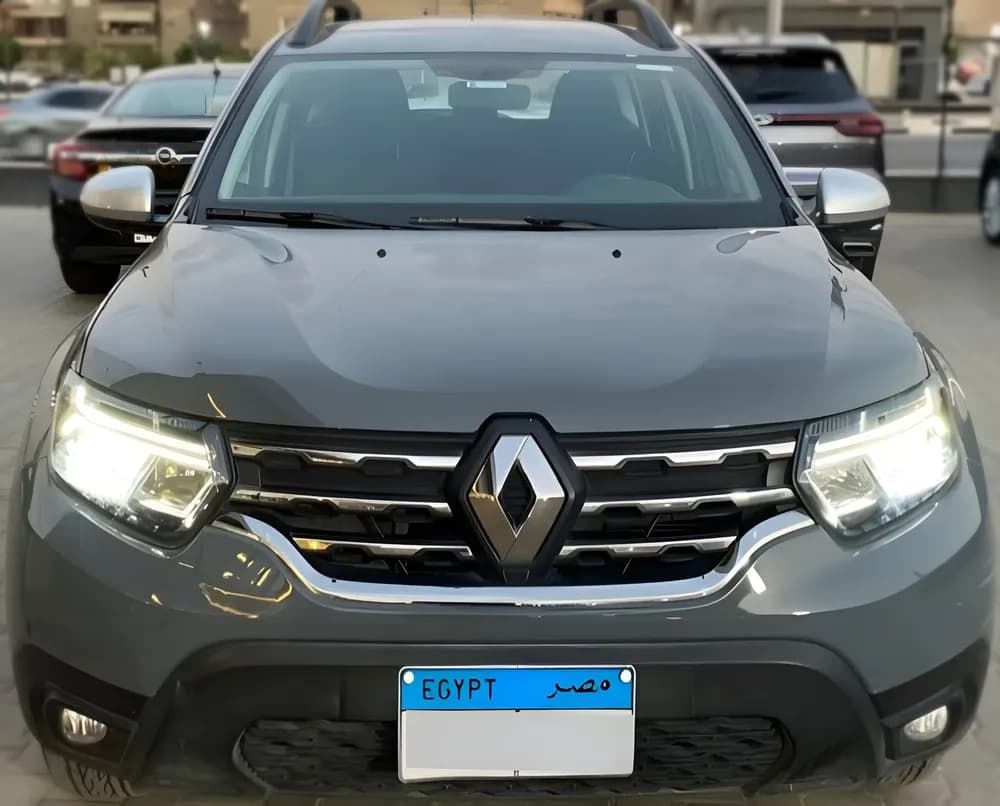
2023
See Chery Tiggo 4 for saleA complete comparison of the Chery Tiggo 4 VS Renault Duster — specs, prices, pros and cons, and live used listings across Egypt.

From EGP 950,000
| #1 Chery Tiggo 4#1 | #2 Renault Duster#2 | |
|---|---|---|
| Price Comparison | ||
| Starting at | — | 880,000 – 950,000 EGP |
| Engine & Power | ||
| Engine | 1,500 cc · 4 cyl | 1,600 cc · 4 cyl |
| Horsepower (bhp) | 145 hp | 115 hp |
| Torque (Nm) | 210 Nm | 156 Nm |
| Acceleration 0-100 Km/h (sec) | 9.6 s | 13.2 s |
| Top Speed (Km/h) | 191 – 200 km/h | 161 km/h |
| Fuel Economy (L/100 Km) | 5.7 – 6.8 L/100km | 5.8 L/100km |
| Fuel Tank Capacity | 57 L | 50 L |
| Gears | 6 | 6 |
| Transmission | Automatic | CVT |
| Drive Type | Front Wheel Drive | Front Wheel Drive |
| Fuel Type | Petrol | Petrol |
| Measurements | ||
| L×W×H | 4.3 m × 1.8 m × 1.6 m | 4.3 m × 1.8 m × 1.7 m |
| Wheelbase (meters) | 2.6 m | 2.7 m |
| Curb Weight (kg) | 1,405 kg | 1,235 kg |
| Trunk Capacity (liters) | 340 L | 414 L |
| Overview | ||
| Body Style | SUV Crossover | SUV Crossover |
| Seating Capacity | 5 seats | 5 seats |
| Doors | 5 doors | 5 doors |
| Features | ||
| Key features | ABS (Anti-lock Brake System)AirbagsAnti theft alarmAUXBA (Brake Assist)BluetoothCD PlayerCenter Arm RestCentral LockingEBD (Electronic Brakeforce Distribution)Fabric SeatsFog Lamps - Front OnlyFoldable Rear Seats with 60:40 SplitHill AssistImmobilizerISOFIX Child Seat AnchorsKeyless EntryMP3Multi-Information DisplayPower SteeringPower Windows - Front and RearRadioRear LampsSeat Adjustment - ManualTraction ControlTyre Pressure Monitoring DisplayUSB PortVariable Cylinder Management (VCM)Wheel SizeWheels - Alloy | 12V SocketABS (Anti-lock Brake System)Acoustic HoodActive BonnetActive SteeringActive Understeer Control (AUC)AirbagsAnti theft alarmAuto Door LockBA (Brake Assist)Bumper Side StepCargo Area LightCenter Arm RestCentral LockingChrome Door HandlesChrome Exhaust PipesChrome Plated Radiator GrilleCollision DetectionCruise Control Switch on SteeringCupholdersDrive ComputerEBD (Electronic Brakeforce Distribution)Electric Door MirrorsFabric SeatsFire ExtinguisherFoldable Rear Seats with 60:40 SplitFootwell LightsGas Shock AbsorberHalogen HeadlampsHDMIHigh Mount Stop LampHill AssistImmobilizerISOFIX Child Seat AnchorsKeyless EntryLED Fog LightsLED TaillightsMap Reading LampsMulti-Information DisplayOBD (On-board Diagnostics)OdometerOff-Road DampersPedestrian airbagPower OutletsPower SteeringPower TailgateRadioRear AC VentsRear CupholdersRear Lcd screensRear Seat PocketsRear Window DefoggerRear WiperRoof SpoilerScuff PlateSeat Adjustment - ManualSeatbelt pretensionerSilver TrimSpeed Sensitive Power SteeringSpoilerSteering Tilt AdjustmentTemperature DisplayTiptronic GearsTrip ComputerTrip MeterTyre Pressure Monitoring DisplayUSB PortVanity MirrorWelcome LightWheel SizeWinchWireless Headphones |
The Chery Tiggo 4 excels with its 145 hp engine and faster 9.6s acceleration, offering a more engaging and responsive drive for enthusiasts.
The Renault Duster is the clear choice for practicality, boasting a generous 414 L trunk capacity, significantly more than the Tiggo 4's 340 L.
While both are efficient, the Tiggo 4's nimble handling and responsive engine make it slightly more agile and enjoyable for urban driving scenarios.
The Chery Tiggo 4's larger 57 L fuel tank provides greater range between fill-ups, making it ideal for extended trips without frequent stops.